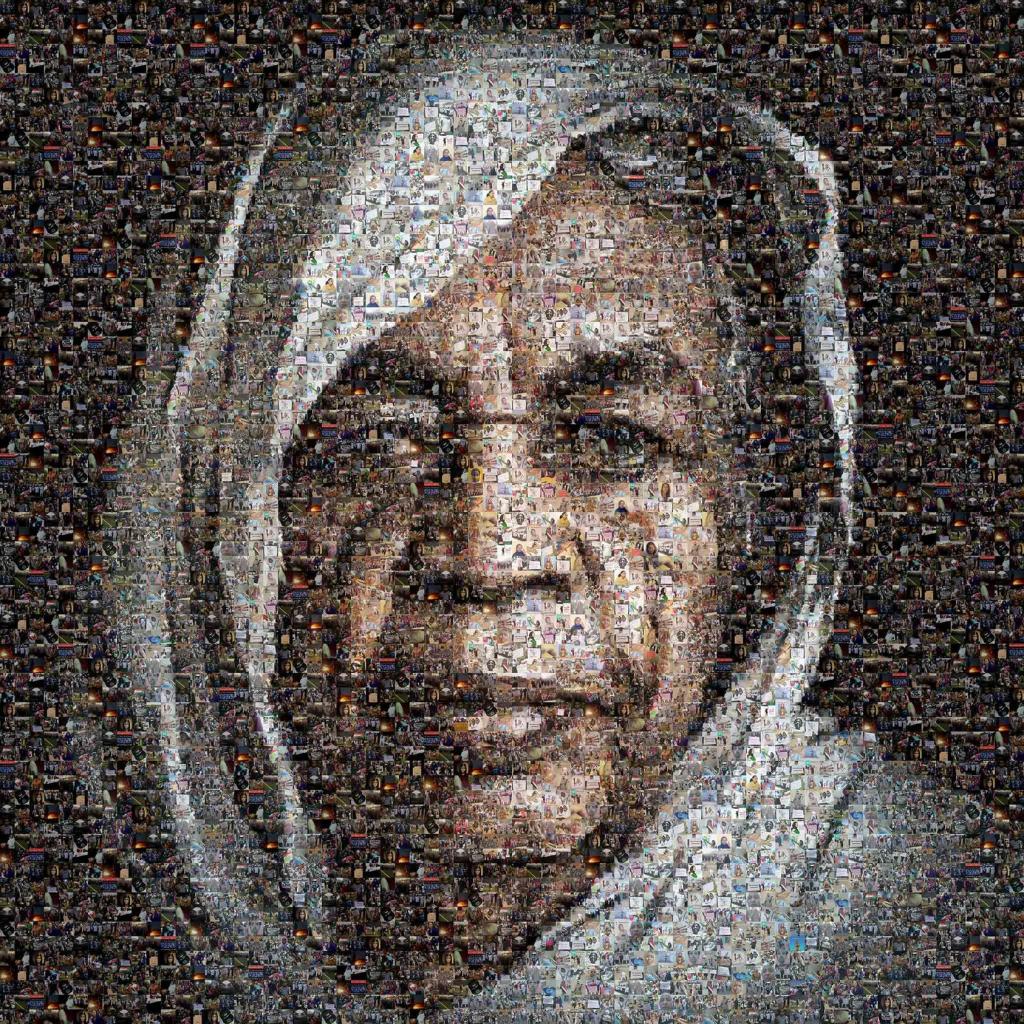
• Memory Is a Political Act

    In a nation where the truth is a weapon of the powerful, where massacres are denied, archives are deliberately destroyed, and history is rewritten to serve the victors. The simple, defiant act of remembering becomes a radical form of resistance. For the people of Sudan, memory is not a passive looking back; it is a political act performed daily. It is how the revolution is kept alive, not as a lost dream, but as a persistent, guiding truth in the face of ongoing violence and displacement. The families who, in the midst of unimaginable grief, meticulously document the names and stories of their martyrs, ensuring they are not just a number in a news report but a life with a purpose. It is in the whispered recitations of the “martyrs’ list” at gatherings, a quiet act that reasserts the price of freedom and the promise owed to the martyrs.

    Trailer excerpt from “Sudan: Remember Us” (Watermelon Pictures), a film that preserves the voices and visions of a revolution still unfolding.

    We see this act of remembrance on the walls of Khartoum itself, now scarred by war. Before the conflict, artists turned the city into a living canvas, painting the faces of the martyrs onto the very barriers erected to silence them. These murals were more than tributes; they were public claims on space and history, a way of saying “we were here, we are here, and we will not let you forget.” Even as these walls are bombed or painted over, their images live on, digitized and shared, a testament to their enduring power.

    Now, with a war attempting to erase its own crimes, this work has become more urgent and perilous. A new generation of archivists, often working from exile collect and verify testimonies: a video of an airstrike, a photograph of a destroyed market, a voice note from a besieged city. They store this evidence on social media, building a digital testament for a future day of accountability. They understand that to control the past is to control the future, and they are fighting to seize that control back.

    This work of memory is not done in isolation. It is a collective project that binds the diaspora to those who remain, the past to the present. The stories of the 2019 revolution fuel the solidarity networks of today, providing a map for how to organize, how to care for one another, and what to fight for. The memory of the sit-in’s communal spirit becomes a model for current mutual aid efforts.

    Remembering is how the revolution’s blueprint is preserved.

    Ultimately, to remember in Sudan is to act. It is to insist that the meaning of the revolution the demands for freedom, peace, and justice that transcends the counter-revolutionary violence meant to kill it. By weaving personal loss into collective history, Sudanese people are building a shield against erasure. They are ensuring that even if the state fails to record the truth, the people will. They are writing their own history, not in ink, but in action, ensuring that the past, with all its lessons and sacrifices, remains a living, active force in the struggle for the future.

    حرام علينا لو دم الشهيد راح

    Translation: “Shame on us if the martyr’s blood is forgotten.”

    References

    Aalen, Lovise. After the Uprising: Including Sudanese Youth. Bergen: Chr. Michelsen Institute (CMI), 2020. https://www.cmi.no/publications/7420-after-the-uprising-including-sudanese-youth.

    Freedom House. “Two Years of War in Sudan: From Revolution to Ruin and the Fight to Rise Again.” Freedom House, April 17, 2025. https://freedomhouse.org/article/two-years-war-sudan-revolution-ruin-and-fight-rise-again.

    Ibreck, Rachel. “Counter-Archiving Migration: Tracing the Records of Protests.” International Political Sociology 18, no. 4 (2024). https://academic.oup.com/ips/article/18/4/olae035/7810806.

    Sudan Art Archive. Sudan Art Archive. Accessed October 12, 2025. https://sudanartarchive.com.

    Sudan Memory. Sudan Memory: Preserving Sudan’s Cultural Heritage. Accessed September 12, 2025. https://www.sudanmemory.org/?

    The Tahrir Institute for Middle East Policy (TIMEP). “Beyond the Battlefield: Sudan’s Virtual Propaganda Warzone.” The Tahrir Institute for Middle East Policy (TIMEP), January 14, 2025. https://timep.org/2025/01/14/beyond-the-battlefield-sudans-virtual-propaganda-warzone/.

    United Nations. “Sudan Conflict.” UN News, 2025. https://news.un.org/en/focus/sudan-conflict.

    United Nations Children’s Fund (UNICEF). “Adolescent and Youth Participation.” UNICEF Sudan, 2024. https://www.unicef.org/sudan/topics/adolescent-and-youth-participation.

    United Nations Development Programme (UNDP). “Empowering Sudanese Youth: Pathways to Peace, Stability and Prosperity.” UNDP Sudan Blog, July 15, 2025. https://www.undp.org/sudan/blog/empowering-sudanese-youth-pathways-peace-stability-and-prosperity.

  • There Is No Justice Without Imagination: Rethinking the Future Beyond the State

    ‘We will rebuild you, Khartoum’ — artwork by Khalid Albaih. A reminder that even in ruin, the dream of peace and renewal endures.

    The unravelling of Sudan has revealed a painful truth: the centralized nation-state inherited from colonialism and sustained by successive military regimes — has been a source of violence rather than protection. For decades, it has served as a prize for elites, a weapon against the periphery, and a resource to be looted. The revolution of 2019 sought to reclaim and transform that state; the war that followed became the old order’s brutal answer to that dream.

    And yet, even in this collapse, something new is beginning to take shape. In homes, in community spaces, and across digital networks, Sudanese people are imagining futures that no longer depend on the state’s promises. The question quietly echoing through these spaces is not how to restore what was, but how to build what should be.

    What if the future lies not in capturing the state, but in creating life beyond its confines? What if belonging could be redefined not by borders or institutions, but by shared care, memory, and responsibility? This is not an abstract hope. It is unfolding in real time: in families rebuilding their lives from displacement, in artists reclaiming beauty from destruction, and in exiled communities who continue to dream of return.

    Even now, as the country fractures along political and military lines, there remains a common thread a quiet, stubborn hope that binds people together. Despite distance, despite loss, despite everything that divides them, Sudanese people continue to imagine a shared horizon: a Sudan where justice replaces vengeance, where communities thrive without fear, and where every person is free to live with dignity. It is this collective hope fragile yet unbroken that keeps the idea of Sudan alive.

    These visions resist despair. They insist that the end of one political order is not the end of Sudan itself. Across cities and camps, in exile and online, people are re-imagining justice as restoration, leadership as service, and freedom as a condition that begins within. Theirs is a future stitched together from fragments tender, uncertain, but alive with possibility.

    The following voice notes were shared by Sudanese people reflecting on what that future means to them — what justice might look like, what change feels like, and how they imagine rebuilding a country still in search of peace.

    Voice note from a student in the diaspora: “My dream for Sudan is simple: stability. That a person can sit at home and feel peace. That the only thing standing between someone and their dream is their own ability.”

    Voice note from a student in the diaspora: “I still feel I can go back. Deep down, I believe everything remains as it was — even as I meet old friends abroad or learn of others’ passing. I still have hope. In a place stripped of law, rights, and freedom, maybe it was inevitable. Sometimes people must lose everything to understand what they once had.”

    Voice note from someone rebuilding life after war: “I dream of a better Sudan — one without racism, where there is health, education, and no forced migration. We dream for this to come soon. There must be justice for there to be change. Without justice, everyone feels they have a right over it. We suffered through death, looting, and despicable acts. Change must come from Sudanese, for Sudan, without any outside involvement.”

    Together, these voices remind us that even when a nation falls apart, its people continue to dream— not of what was lost, but of what might still be built. In their words, Sudan lives on, carried by those who refuse to stop imagining. As I write this, Sudan is being rebuilt, slowly, painfully, but with purpose. The journey is long, yet in every act of care, creation, and return, there is progress. There is life still unfolding.


    All audio recordings are original submissions collected for this project, “Fragments of a Revolution: Stories of Struggle and Survival from Sudan.” Shared with consent by Sudanese contributors (2025).

  • From Leading the Streets, to Loosing the Seats

    The revolution’s greatest triumph was also its most perilous turning point. The toppling of Omar al-Bashir in April 2019 was a moment of ecstatic, collective victory, a proof of power that belonged to the multitude in the streets. But what happens the morning after a revolution? When the barricades are cleared and the chants fade, the struggle inevitably shifts from the open, fluid space of the square to the closed, rigid corridors of power. This transition, from leading the streets to losing the political seats, marks the moment a revolutionary spirit confronts the sobering mechanics of statecraft.

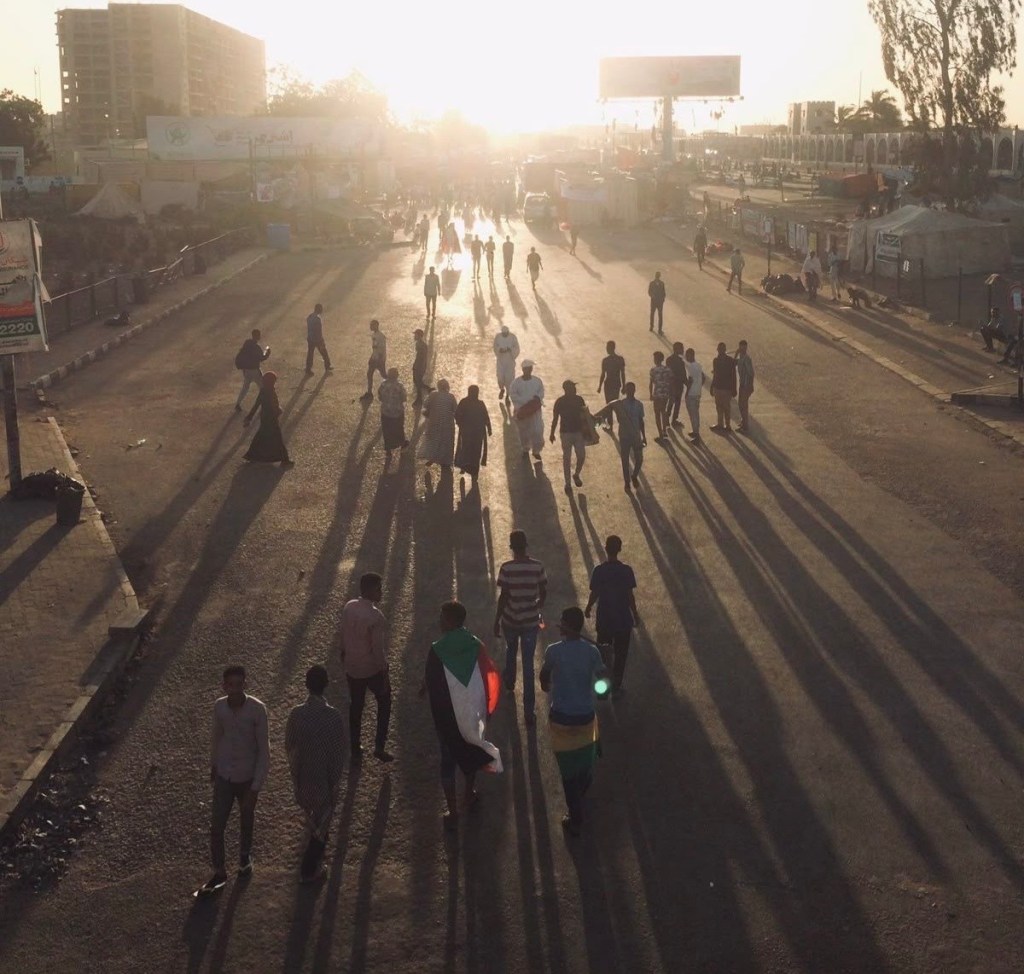
    Protesters walking toward the Khartoum sit-in site during Sudan’s 2019 revolution. Photo source unknown.

    Protesters walking toward the Khartoum sit-in site during Sudan’s 2019 revolution. Photo source unknown.

    The Forces of Freedom and Change (FFC), the broad coalition that gave a political voice to the sit-in, found itself thrust into a role it was never designed for: administrator. Its strength lay in its diversity and its power in its connection to the street. It was a magnificent vehicle for dissent, a chorus of countless voices united by a single goal: “Tasqut bas.” But governing requires not a chorus but a conductor; not a list of shared grievances, but a coherent, actionable plan for a nation in fragments.

    This inherent fragmentation, with its broad tent spanning the political spectrum, proved its Achilles’ heel and left it ill-suited for the messy compromises of politics. The urgent, tangible demands of the streets: justice, peace, bread now had to be negotiated against the cold realities of a bankrupt economy, a entrenched “deep state,” and a military establishment that never truly relinquished power. The revolutionary coalition began to fray, caught between the immediate needs of the people and the protracted, often opaque, negotiations with the generals.

    The language of change itself became a liability. The same slogans that mobilized millions were ineffective in drafting policy or managing international debt relief. The moral authority earned on the streets did not automatically translate into political leverage at the negotiating table. The military, a institution versed in the dark arts of realpolitik and patient maneuvering, expertly exploited these divisions. They watched and waited as the revolutionary forces struggled to build a consensus, their own unity of purpose standing in stark contrast to the FFC’s evolving internal debates.

    And then came the betrayal. The October 2021 coup was not merely a military power grab; it was the logical conclusion of this imbalance. It was a stark lesson that the generals had only been playing for time, waiting for the public’s revolutionary fervor to wane and for the political alternatives to collapse under their own weight. The FFC, and the revolutionary movement it represented, found itself outmaneuvered. It had “lost the seats” before many of them were ever truly won.

    This is not just a story of political failure. It is a deeper story about the nature of revolution itself. It reveals the fundamental mismatch between the power to disrupt and the power to govern. The streets operate on a logic of purity and absolute demands; politics demands compromise and incrementalism. The tragedy of Sudan’s transition is that by the time the revolutionary forces began to learn this new language, the space to speak it had already been violently closed.

    “Drums of defiance.” Gidam rhythms fill the streets of Khartoum during Sudan’s October 2021 protests. Video source: Pan African Music (YouTube).

    “The power to disrupt is not the power to govern.”

    The question that lingers is not just who lost the seats but whether the existing seats, the very structures of the old state, can ever be capable of holding the revolutionary future that was imagined in the streets of Atbara and the squares of Khartoum. The answer may determine whether the next chapter is one of reclaiming those seats, or of building entirely new ones.


    References

    ACLED (Armed Conflict Location & Event Data Project). Appetite for Destruction: The Military Counter-Revolution in Sudan. October 2021. https://acleddata.com/report/appetite-destruction-military-counter-revolution-sudan.

    BBC News. “Sudan coup: World Bank suspends aid after military takeover.” BBC News, October 28, 2021. https://www.bbc.co.uk/news/world-africa-59066654.

    C4ADS. Breaking the Bank: How a Militarised Financial Regime Stifles Sudan’s Transition. Washington, DC: C4ADS, July 2022. https://c4ads.org/reports/breaking-the-bank.

    Freedom House. “Civic Mobilizations in Authoritarian Contexts: The Case of the 2018–2019 Revolution in Sudan.” Freedom House, 2022. https://freedomhouse.org/report/special-report/2022/civic-mobilizations-authoritarian-contexts/sudan-summary.

    Makawi, Raga, and Justin Lynch. Sudan’s Unfinished Democracy: The Promise and Betrayal of a People’s Revolution. London: Hurst, 2022.

    Pan African Music. “Gidam – Drums of Protest in Khartoum (Sudan 2021).” YouTube video, posted [February 18th, 2022]. https://www.youtube.com/[…].

  • When the Protest Ends, The Work Begins

    Soldiers may have cleared the sit-in, but they could not end the revolution. It shifted into courtyards and kitchens, back alleys and WhatsApp groups, where people reimagined survival itself as a political act. After the October 2021 military coup dissolved Sudan’s fragile transitional government, formal politics stalled, but the uprising’s social energy did not fade. Instead, it was redirected into a quieter, slower struggle to create new forms of life and governance from below.

    Neighbourhood resistance committees (lijan al-muqawama), first organised to mobilise protests, became the backbone of this next phase. With ministries paralyzed and services collapsing, these committees coordinated food distribution, sourced medical supplies, arranged safe routes during crackdowns, and mediated local disputes. Their work embodied what sociologist Asef Bayat calls quiet encroachment—the patient, everyday expansion of autonomy by ordinary people. Rather than waiting for decrees or negotiating tables, they steadilyassumed the functions the functions of a state that had withdrawn, proving that authority could be rebuilt from the street level. As Bayat’s concept suggests, resistance in Sudan after 2021 was no longer about seizing power, but about quietly reclaiming the right to live with dignity.

    Women’s networks were central to this transformation. Long the custodians of Sudanese communal life, women converted their knowledge of household management into collective strategies of survival. These were not formal organisations or branded initiatives but spontaneous acts of solidarity: neighbours cooking together, mothers pooling medicine, young women coordinating safe passages through curfews. They organised communal kitchens, secured life-saving medicine, and opened their homes as spaces of shelter and deliberation. In doing so they enacted prefigurative politics living the democratic and egalitarian future they envisioned, not as a promise deferred but as a practice unfolding in the present. Their labour showed that care work, so often dismissed as private, is in fact political at its core.

    Merghani Salih’s mosaic, “The Kandaka,” celebrates the pivotal role of Sudanese women in the revolution.

    Even when security forces made public gatherings dangerous, encrypted WhatsApp groups and other digital spaces kept collective decision-making alive. These networks extended the open, participatory ethos of the 2019 sit-in into everyday life, enabling dispersed communities to debate priorities and distribute scarce resources despite surveillance and repression.

    By mid-2022, international headlines had largely moved on, framing Sudan’s revolution as broken. Yet within neighbourhoods across Khartoum, Atbara, and Port Sudan, a different story persisted. Through shared meals, mutual protection, and collective deliberation, Sudanese communities were proving that the revolution was not an event to be won or lost in a single day. It was, and remains, a long process of social reconstruction one that measures victory not only in the fall of rulers but in the patient work of remaking society from below.


    References

    Abbashar, Aida. Resistance Committees and Sudan’s Political Future. PeaceRep: The Peace and Conflict Resolution Evidence Platform, 2023.
    https://peacerep.org/wp-content/uploads/2023/07/Abbashar-2023-Sudan-Resistance-Committees.pdf

    Bayat, Asef. Life as Politics: How Ordinary People Change the Middle East. 2nd ed. Stanford: Stanford University Press, 2013.

    Europe Solidaire. “Women in Sudan: Their Role, Their Rights, Their Resistance.” Europe Solidaire Sans Frontières, 2022.
    https://www.europe-solidaire.org/spip.php?article62120

    Scott, James C. Weapons of the Weak: Everyday Forms of Peasant Resistance. New Haven: Yale University Press, 1985.

    Sedig, Mayada. “Women and the Revolution: Feminist Organizing in Sudan’s Resistance.” Feminist Africa 5, no. 1 (2024).
    https://feministafrica.net/wp-content/uploads/2024/06/04_FA-Vol.5.1_Feature-Article_Mayada_Sedig.pdf

    Tønnessen, Liv. “Sudanese Women’s Revolution for Freedom, Dignity and Justice Continues.” Chr. Michelsen Institute (CMI), March 2022.
    https://www.cmi.no/publications/7355-sudanese-womens-revolution-for-freedom-dignity-and-justice-continues

    The Timep Initiative for Policy. “Resistance Committees: The Specters Organizing Sudan’s Protests.” TIMEP, November 26, 2021.
    https://timep.org/2021/11/26/resistance-committees-the-specters-organizing-sudans-protests/

    Verjee, Aly. “Understanding Sudan’s Transition: The Role of Resistance Committees.” Forum for Development Studies47, no. 4 (2020): 511–529.
    https://www.tandfonline.com/doi/full/10.1080/1600910X.2020.1856161

  • This War was Never Ours

    To the outside world, the war that erupted in Sudan on April 15, 2023, appeared as a sudden descent into chaos, a baffling conflict between rival generals. But for many Sudanese, it was a familiar nightmare returning in its most vicious form: the logical, brutal culmination of a system built on militarization and the violent contest for resources. To understand this war, one must reject the narrative of a spontaneous breakdown. It is instead the privatization of the state by its armed institutions, a final, devastating separation between those who wield power and those who bear its cost.

    The conflict between the Sudanese Armed Forces (SAF) and the Rapid Support Forces (RSF) is not a war for Sudan’s future but a battle over the fragments of a nation exhausted by war and neglect. It is a predatory struggle over assets, territory, and networks of economic extraction, from gold mines to ports, that have long sustained these entities. As scholar Alex de Waal has detailed, Sudan operates within a “political marketplace” where loyalty is commodified and violence is the primary currency. This war is that marketplace’s ultimate expression: a violent merger-and-acquisition battle where the people are not stakeholders but spoils.

    The revolution’s dream of a civilian, democratic state posed an existential threat to this system. The demand to dismantle the economics of war and subordinate the military to civilian authority directly challenged the power and wealth of the generals. The October 2021 coup was their first counter-revolutionary response; the April 2023 war is its monstrous successor. It is the sound of the deep state, in the words of researcher Kholood Khair, “eating itself,” consuming the nation in the process.

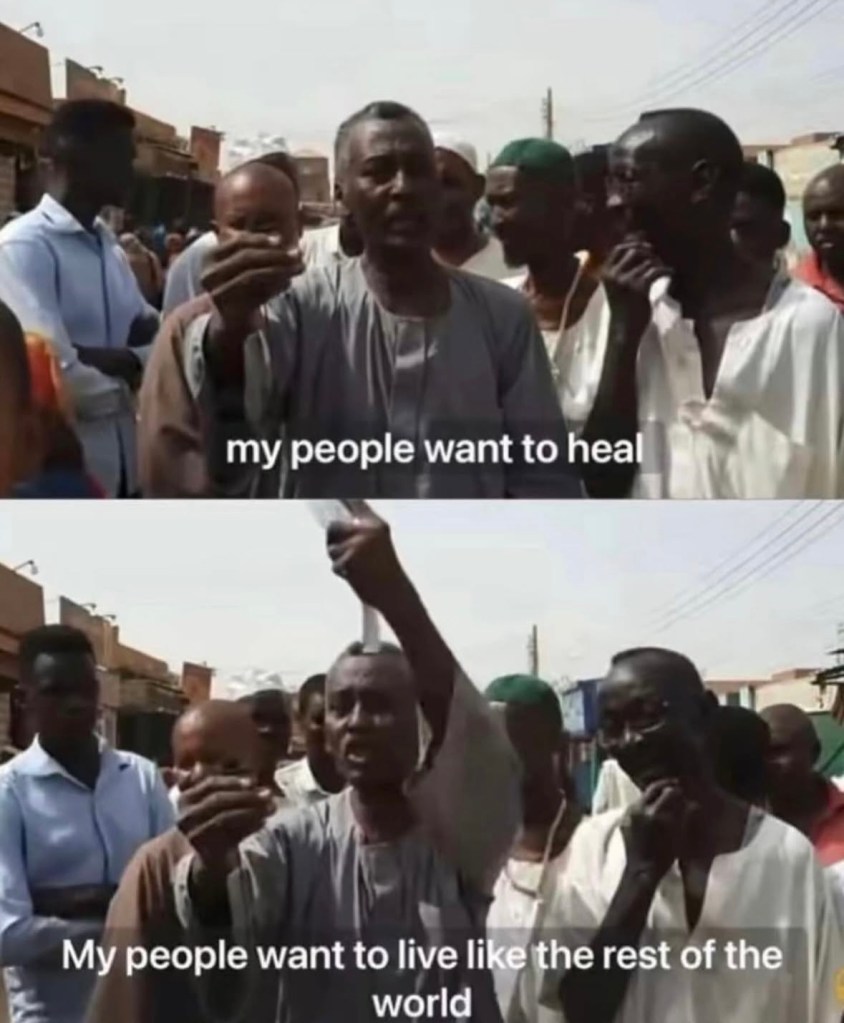
    “My people want to heal. My people want to live like the rest of the world.” Shared by Archive Africa, this image captures both the ache and the endurance of a people still reaching for life beyond survival.

    Amidst the airstrikes and devastation, a clear, defiant voice emerges from the rubble: “This war is not ours.” This statement is more than a cry of innocence, it is a political diagnosis. It marks a boundary between the people and the warring parties, a refusal to be conscripted into a narrative of tribal or ideological conflict. Across Sudan, stories of quiet defiance multiply: in hospitals lit by candlelight, in classrooms turned into shelters, and in neighborhoods where strangers share their last meal. Their struggle is not for power but for survival; not for conquest but for community.

    This civilian resistance is the revolution’s legacy in its most harrowing form. The same neighbourhood resistance committees that once organized protests and built democratic practices now coordinate emergency response and mutual aid under fire. Women’s networks, once the architects of the sit-in’s logistics, now lead efforts to source and deliver medicine, organize communal kitchens, and monitor ceasefires from their homes. They embody what scholar Zachariah Mampilly calls rebel governance without a rebel cause” creating islands of order and humanity in a sea of militarized chaos.

    A street in Sudan, filmed by @sara.creta — life persisting among ruins.

    This war is fought over Sudan; its land, its resources, its capital, but not for its people. The gulf between the ambitions of those in power and the daily realities of ordinary Sudanese could not be wider. One side dreams of total domination; the other dreams of bread, fuel, and a future where children are neither soldiers nor victims. Between these two realities lies the quiet collapse of a promise. The revolution’s dream of peace and justice was swallowed by violence. Its call for “Freedom, Peace, and Justice” now lingers as an echo, betrayed by the very forces it sought to dismantle.

    In the ruins of governance, Sudanese civilians are keeping the country alive. As the state collapses under the weight of war, communities have become their own first responders. They feed, shelter, and protect one another where no authority remains. In displacement camps, volunteers organize food rotations and informal schools; in besieged neighborhoods, youth groups coordinate safe passages and share medicine across frontlines. These acts are not merely survival; they are a quiet reassertion of political life, proof that solidarity can flourish even when power disappears.

    Yet outside observers too often narrate Sudan through generals, treaties, and ceasefires, missing the real story: that life continues because ordinary people insist it must. The international gaze sees collapse, but on the ground, there is construction of trust, of care, of fragile networks of endurance. This war has revealed not only the cruelty of power but the creativity of those who live without it. The future of Sudan, if it is to exist at all, is already being built in these invisible spaces of mutual survival by the same hands that never asked for war but continue to hold the country together.


    References

    Abbashar, Aida. Resistance Committees and Sudan’s Political Future. PeaceRep: The Peace and Conflict Resolution Evidence Platform, 2023. https://peacerep.org/wp-content/uploads/2023/07/Abbashar-2023-Sudan-Resistance-Committees.pdf.

    BBC News. “Sudan Conflict: The People Caught between Two Warring Generals.” BBC News, June 2023. https://www.bbc.co.uk/news/articles/cjel2nn22z9o.

    de Waal, Alex. The Real Politics of the Horn of Africa: Money, War and the Business of Power. Cambridge: Polity Press, 2015.

    Mampilly, Zachariah. Rebel Rulers: Insurgent Governance and Civilian Life during War. Ithaca, NY: Cornell University Press, 2011.

    World Peace Foundation. “The Political Marketplace Project.” World Peace Foundation, 2023. https://worldpeacefoundation.org/project/political-marketplace/.

    Ylönen, Aleksi. “Violent Political Transitions and State Fragmentation in Sudan.” Small Wars & Insurgencies 33, no. 3 (2022): 583–608. https://doi.org/10.1080/09592318.2022.2144000.

    Africa Center for Strategic Studies. “Financial Interests of Sudan’s Generals.” Accessed October 12, 2025. https://africacenter.org/experts/financial-interests-sudan-generals/.

    ———. “Resetting the Political Calculus of the Sudan Conflict.” Accessed October 12, 2025. https://africacenter.org/spotlight/resetting-the-political-calculus-of-the-sudan-conflict/.

    Office of the High Commissioner for Human Rights (OHCHR). “Sudan Crisis Deepens amid Rising Civilian Casualties, Growing Ethnic Violence.” September 2025. https://www.ohchr.org/en/press-releases/2025/09/sudan-crisis-deepens-amid-rising-civilian-casualties-growing-ethnic-violence.

    TIMEP – The Tahrir Institute for Middle East Policy. “A Plague o’ Both Your Houses: The False Dilemma of Sudan’s Elites.” March 7, 2023. https://timep.org/2023/03/07/a-plague-o-both-your-houses-the-false-dilemma-of-sudans-elites/.

  • The Uprising Didn’t Start in Khartoum

    It is tempting to frame a revolution from its climax: the iconic images of a million people flooding the streets of the capital, the sit-in at the army headquarters, the moment a dictator’s three-decade reign is brought to an end. This lens, however, is a seductive illusion. It centres the state, its institutions, and its most visible city as the primary stage for history. But in Sudan, the state had long been failing its people everywhere but Khartoum. The revolution, therefore, did not begin in the centre. It ignited in the peripheries, in the towns history often overlooks, where the will to imagine a different future was not a sudden inspiration but a necessity forged by decades of systemic neglect.

    The @sudan video looks back at the protests that shaped a generation the echoes of courage that still reverberate through the streets.

    Before the chants of “Tasqut bas!” (“Just fall, that’s all!”) echoed through Khartoum’s avenues, they were murmured in the homes of Atbara, the “Railway City,” once the heart of Sudan’s historic labour movement. The spark was not a political manifesto drafted in an elite club, but the simple, brutal mathematics of survival: the tripling of bread prices. When the government cut subsidies in December 2018, it was in towns like Atbara, Dongola, and Port Sudan that the first protests erupted not as a coordinated national campaign, but as the inevitable explosion of a pressure built up over a lifetime.

    This was not a new struggle; it was the latest chapter in an old one. Atbara’s legacy of labour organisation and resistance meant its people understood the power of collective action and the weight of broken promises. Their uprising was a reclamation of that history. Similarly, in Port Sudan, protests were fuelled by more than the price of bread; they were driven by deep-seated grievances over the systemic marginalisation of the east, a region whose resources have long been extracted while its people saw little return. This pattern repeated itself in Damazin and Nyala, where the revolution felt like a continuation of long-standing struggles against a central power that governed through neglect and violence.

    These towns were not simply following a script written in the capital. They were writing their own. They became the laboratories of resistance, proving that the regime’s authority could be challenged. Their early, fierce protests which were often met with disproportionate violence served as a crucial test. They demonstrated the regime’s brittleness and, more importantly, showed a fearful nation that it was possible to stand up. This was the periphery, in the political sense long described by scholars such as Mahmood Mamdani, asserting itself as the engine of change.

    The journey of the revolution from these peripheral towns to the capital is the story of a nerve impulse travelling through a national body. The protests moved along the very arteries the state had neglected: the highways connecting the north, the digital networks sharing videos of courage, the whispered solidarity between cousins in different cities. By the time the wave reached Khartoum, it was not a single wave but a confluence of countless streams of anger, hope, and resolve from every corner of the country.

    To begin the story in Khartoum is to miss the point entirely. It is to ignore the deep, structural reasons why the revolution happened and to misunderstand its truly popular character. The uprising was a decentralised network of struggles, united by a common goal but rooted in unique local contexts of injustice. It was the periphery speaking back to the centre, not waiting for its permission, and in doing so, reminding the nation that the future is not built in the halls of power alone, but in the steadfastness of communities long told they were forgotten.


    References

    Al Jazeera. “Sudan’s Port Sudan Protesters Lift Blockade after Deal.” Al Jazeera, October 3, 2021. https://www.aljazeera.com/news/2021/10/3/sudans-port-sudan-protesters-lift-blockade-after-deal.

    BBC News. “Sudan Crisis: Security Forces Fire on Khartoum Protesters.” BBC News, June 3, 2019. https://www.bbc.com/news/world-africa-48511226.

    Berghof Foundation. Sudan: Options for Systemic Conflict Transformation. Berlin: Berghof Foundation, 2019. https://berghof-foundation.org/files/publications/SUD_Sudan_Options_for_Systemic_Conflict_Transformation.pdf.

    Daily Sabah. “From Atbara to Khartoum: The Many Phases of Sudan’s Revolution.” Daily Sabah, August 30, 2019. https://www.dailysabah.com/op-ed/2019/08/30/from-atbara-to-khartoum-the-many-phases-of-sudans-revolution.

    de Waal, Alex. “The Historical Precedents of the Current Uprising in Sudan.” The New Yorker, January 10, 2019. https://www.newyorker.com/news/news-desk/the-historical-precedents-of-the-current-uprising-in-sudan.

    Mada Masr. “Atbara: The First Days of the Sudanese Revolution.” Mada Masr, May 2, 2019. https://www.madamasr.com/en/2019/05/02/feature/politics/atbara-the-first-days-of-the-sudanese-revolution/.

    Mamdani, Mahmood. Neither Settler nor Native: The Making and Unmaking of Permanent Minorities. Cambridge, MA: Harvard University Press, 2020.

    Radio Dabanga. “Damazin Residents Protest Economic Conditions.” Radio Dabanga, July 21, 2021. https://www.dabangasudan.org/en/all-news/article/damazin-residents-protest-economic-conditions.

    Sudan (@sudan). “Video of Protests Across Sudan Over the Years.” Instagram video, October 29, 2021. https://www.instagram.com/tv/CVn4IUcq0QH/?igsh=MTJ3OTNxbDMxMDhmbQ==.

    Sudan Tribune. “Sudan: Nyala Protesters Demand Better Services.” Sudan Tribune, April 18, 2019. https://sudantribune.com/article67769/.